
Smooches: Are They Safe?
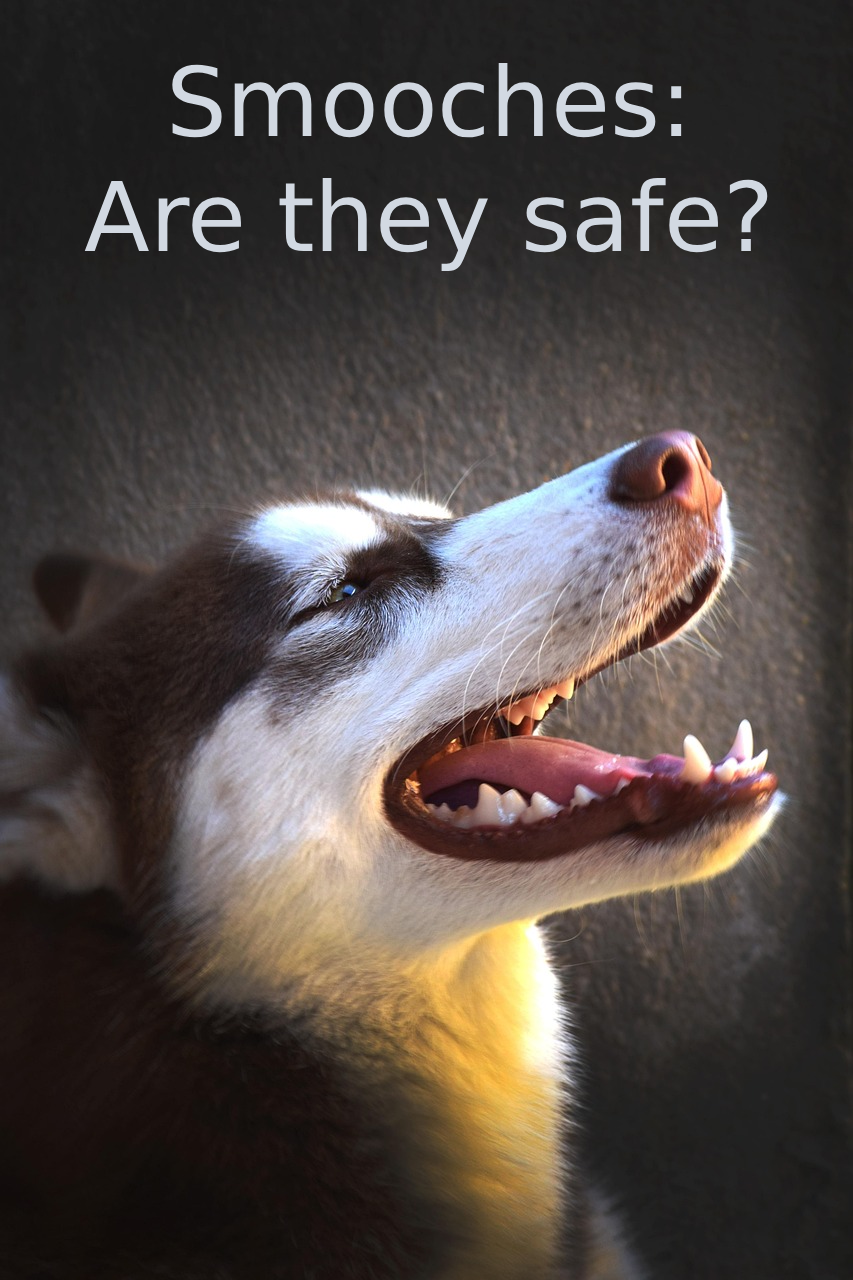
Unsurprisingly, many of us enjoy or look forward to kissing dogs. However, we occasionally hear claims which call into question the safety of such affection; some insist that humans will get sick from it. As responsible, ethical, and conscientious kissers, it is our duty to research how founded these concerns are.
According to Enviroliteracy.org’s article titled “Are Dog Kisses Safe,” there are several “potential health risks” associated with mouth-to-mouth canine loving. They list a variety of pathogens which *could* be transmitted through saliva; however, the key word here is *could*. Passing germs around requires one to have them. You aren’t going to spontaneously contract leprosy from shaking hands with a healthy person. The same applies for zoonotic diseases; if the dog has an illness or parasite, they may pass them to whomever they kiss. If they do not, then you’re free to smooch away without consequence (other than getting covered in slobber).
In the spirit of safety, I would like to list some risk factors. Firstly, immunocompromised individuals need to be particularly careful, as Capnocytophaga are common residents in canine jaws. They are harmless to most humans, but a weakened immune system enables serious infection. Those affected by this general principle include the elderly, the pregnant, and the ill; exercise more caution if you fall into one of those categories as germs that are otherwise harmless or mild can be life-threatening. Furthermore, keep tabs on what your dog’s eating and licking. Potentially dangerous surfaces and items should be avoided, especially uncooked meat. Salmonella and E. Coli are generally disliked at the best of times. There may be pathogens on everyday surfaces that you are unaware of, so moderate caution is advised.
If you are especially concerned, the aforementioned article noted that establishing proper hygiene and health practices for both you and your companion is beneficial towards preventing zoonotic disease. Unfortunately, they still discourage mouth kisses entirely, though they *do* promote the use of body language to determine if a dog agrees to a kiss. On that front, I wholeheartedly agree with their presentation. As I mentioned earlier, pathogens must be present in order to be spread; therefore, an abstinence-only stance is absurd. Their article may not explicitly state that kissing is always dangerous, but it emphasizes risks to a frankly hilarious point– they “don’t recommend” sleeping in the same bed as a dog, either.
Another article by Sciencealert.com recounts a story in which a woman contracted meningitis after Pasteurella multocida from her dog’s mouth crossed her blood-brain barrier. This is definitely alarming, but it should be noted that although this species of bacterium is native to many animals, it doesn’t always infect humans. When it does, it’s usually mild and easily treatable with antibiotics. Additionally, other sources reported that it’s harmless within the mouth, so long as there are no cuts or openings. Sciencealert.com misrepresented the actual risk to support their argument, even admitting that studies generally show low rates of zoonotic disease.
This leads me to wonder– are the cleanliness concerns warranted, or do they say something about how society views even the most domesticated nonhumans? I won’t deny that dogs sometimes want to eat or lick things which they really shouldn’t; we should acknowledge, however, that our position as a species with collaborative knowledge allows us to understand risks like those in ways others might not. Dogs understand visibly inherent patterns of consequences, not seemingly random outcomes. This doesn’t make them any lesser than us, it just means we have the responsibility of looking out for them and ourselves.
We’ve all heard the ubiquitous myth that dog mouths are cleaner than human mouths. After conducting further research, I’ve found this claim to be unanimously rejected by scientists. However, this saying contains a kernel of truth; there are about the same number of bacterial variants in human and canine oral cavities. We share many of these in common and there’s a low risk of zoonotic disease, so dog mouths are effectively about as clean as human mouths. If hygiene, potential risk factors, and human responsibility are taken into account, the risk is negligible.
The amount of mischaracterization and overemphasis of risks I saw while researching this subject was concerning. Nearly all of my sources agreed or admitted on some level that the risks are usually not very serious, especially if proper hygiene is established. However, articles such as Sciencealert.com’s seem to have a bias which frames animals (particularly canines) as inherently dirty. As I mentioned, there is some truth to this– other animals have different immune systems and levels of awareness concerning sanitation. The solution is for us to take charge of that facet of our companions lives (to a reasonable extent).
The assumption of inherent uncleanliness– independent of hygiene– just reeks of human exceptionalism. As I have demonstrated, our standards don’t make us better; they just make us who we are. Our perspectives are valuable, but not at the expense of our companions’. Now, if you’ll excuse me, anthropocentrism has left a bad taste in my mouth and I need a palate cleanser– preferably in the form of a canine kiss.
Article by akesi_Kuwa (November 2025)
Questions, comments or concerns? Check out our Matrix server! https://join.zooey.pub
